When Astera launched its life sciences division, Radial, earlier this year, we set out to reimagine how life science research happens at a systems level. Today we are announcing $5 million in seed funding to The Deliverome Project, a new fit-for-purpose nonprofit research organization building the toolkit to unlock a long-standing bottleneck in precision medicines: targeted delivery.
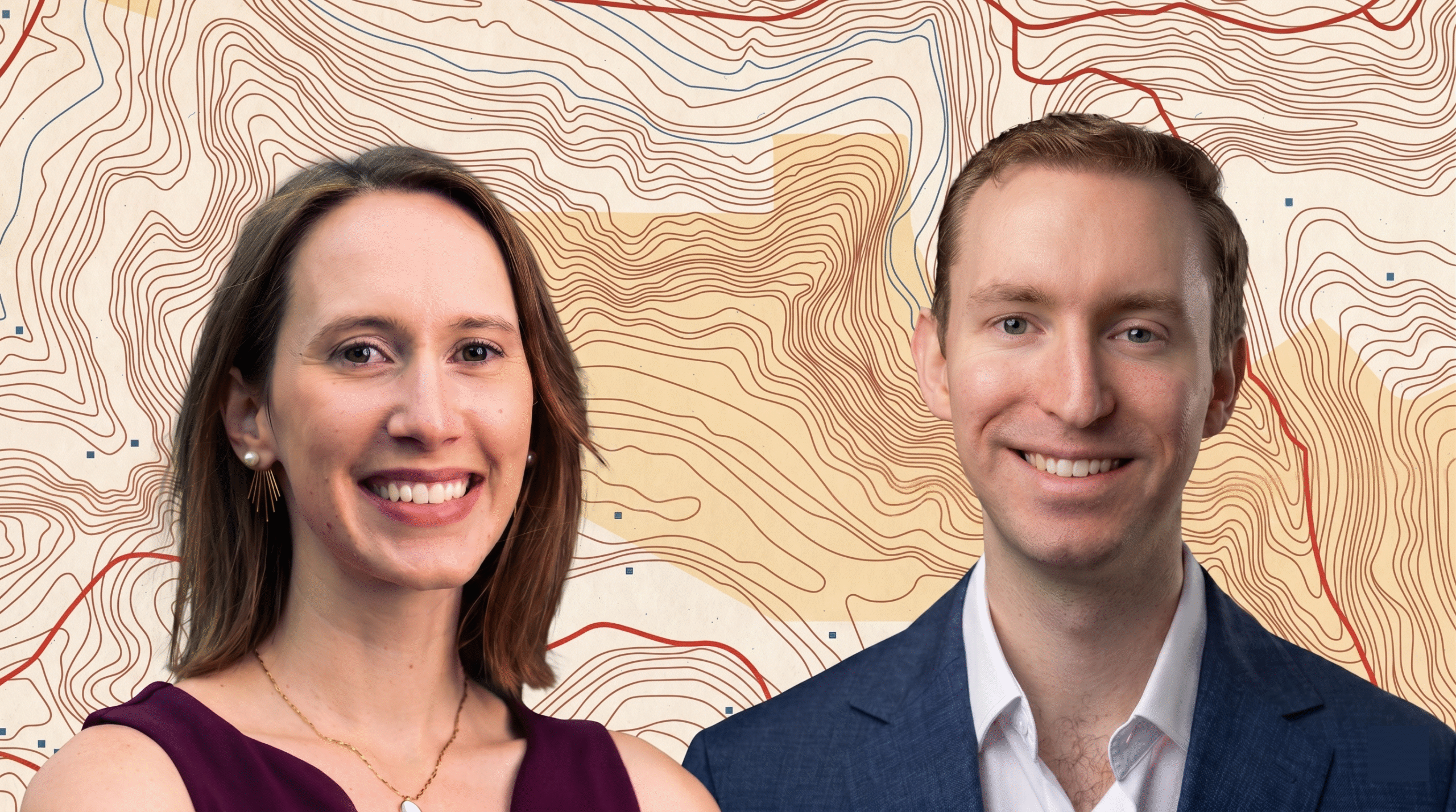
The Deliverome Project will create the first comprehensive, open-source, multimodal atlas of proteins on the surface of human cells. Precision medicine has long needed a high-quality, comprehensive dataset that not only catalogs these biomolecules’ specificity and abundance, but also characterizes their ability to traffic cargo into human tissues. But no one group has had the right combination of technology, institutional structure, and incentives to pull it off. The Deliverome, led by cofounders Becca Carlson and Bobby Hollingsworth, are up for the challenge.
Precision medicine’s missing data problem
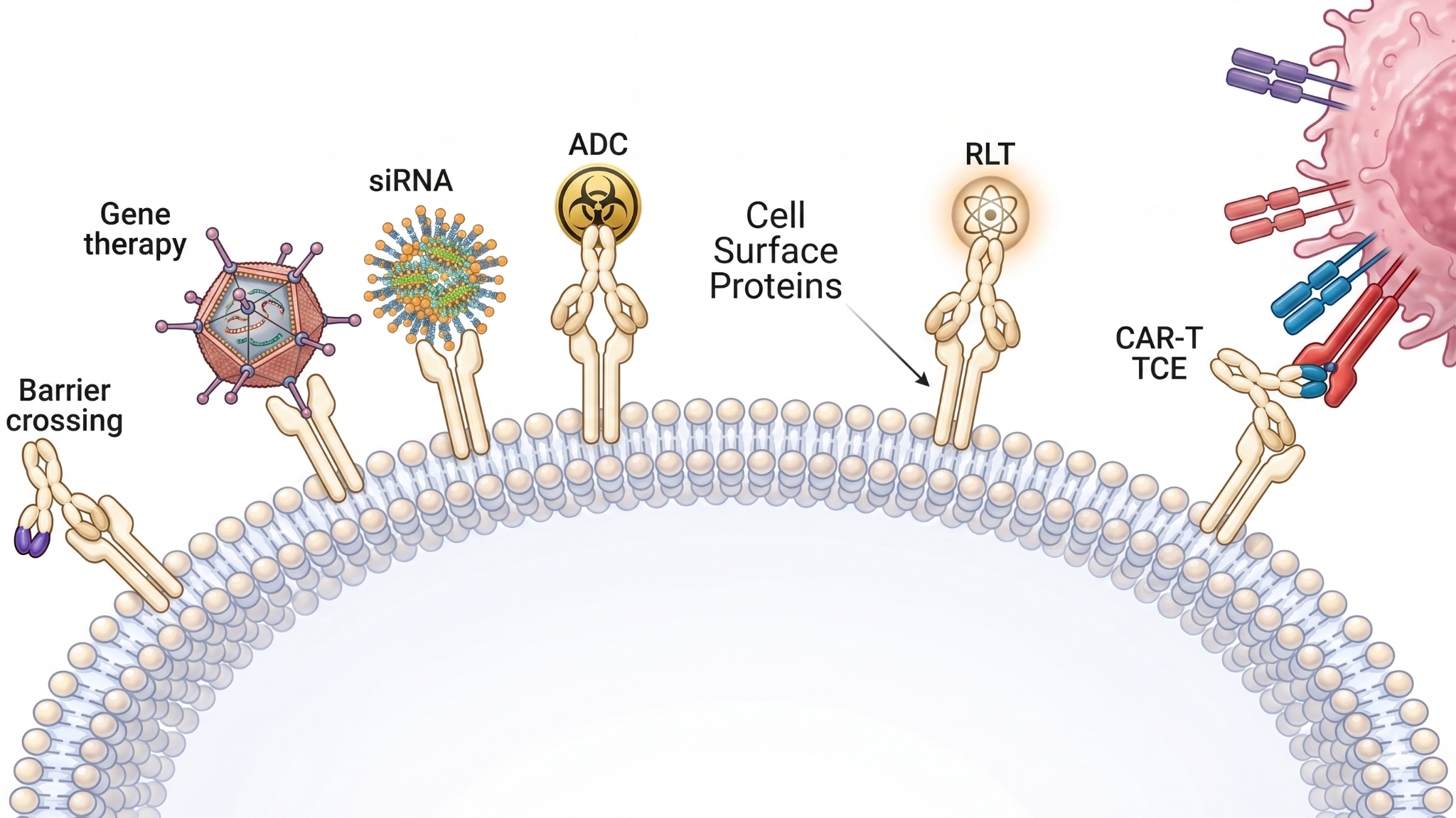
The payloads of precision medicine have never been more sophisticated. Today’s scientists can engineer CAR-T therapies for wiping out blood cancers; gene-editing to permanently correct heritable disease; RNA medicines that block harmful proteins from forming, and antibody-drug conjugates that destroy cancer cells while sparing healthy tissue. But precision medicine’s promise rests on our ability to get those revolutionary payloads to exactly the right cells in the body. Delivering cutting-edge therapy means inscribing the correct molecular address. And here, the field is flying blind.
The overwhelming majority of drugs in development today cluster around a small set of known, validated surface targets. That clustering isn’t a choice; it’s a data gap. Human tissues carry thousands of individual surface proteins; the vast majority (and their millions of pairwise combinations) remain undiscovered. Even for familiar proteins, biologists have little sense of how abundant they are across different cell types, or how they circulate cargo in and out of the cell. Neither a scientist nor an AI model can reliably predict which surface proteins will enable safe, effective delivery to a given disease.
A purpose-built, open-science solution
The Deliverome team will atlas the presence and nature of cell surface proteins using two increasingly sophisticated techniques. The first is mass spectrometry, which will measure surface protein abundance in different human tissue; the second will determine which proteins support cellular internalization of cargo. Both approaches are high-throughput by design. Deliverome will be able to interrogate thousands of surface proteins simultaneously.
The seed funding we are announcing today will allow the team to build out and validate the necessary technology platforms, hire a team, begin sample acquisition, set up computational infrastructure, and start sharing data. Any surface target the Deliverome maps may be the missing link for the next transformative therapy.
Deliverome’s methods and findings will all be released openly. Expect to find protocols, reagents, raw data, and analytical outputs shared continuously in AI-ready formats without waiting for journal publication cycles and with an eye towards reuse. The goal is to make the data generative for the entire ecosystem — every academic lab, every biotech company, every AI model building the next generation of precision medicines.
Why a dedicated nonprofit org is the right structure
Precision medicine’s glaring data gap on surface proteins is a too-common failure of the market. Pharma companies that build surface protein data keep it proprietary and narrowly focused. Academic labs lack the scale, coordination and incentives to execute at the required level. Venture-backed startups face immediate pressure to narrow to one therapeutic area, protect data as IP, and deprioritize the platform as they advance their first clinical asset. Everyone would benefit from a high-quality, comprehensive cell-surface protein atlas, but no one in the current system will build it.
The Deliverome Project requires the resources and freedom to pursue the full problem space: industrial-scale execution combined with an open science mandate. Radial’s mission is to experiment with what science gets done, how science is organized, and what science produces. Structuring this project as an FRO allows the Deliverome Project to meet each of these ambitions.
Ambitious science requires entrepreneurial, technical founders
The Deliverome’s cofounders Becca and Bobby each have a rare combination of deep technical fluency in experimental platforms, genuine conviction to open science, and the drive to build an organization from scratch. They bring with them years of experience in functional genomics and proteomics, cell biology and structural biology, platform building and target identification.
Becca’s PhD in the Blainey and Hacohen labs at the Broad Institute led her to develop single-cell genetic analyses called optical pooled screens. She then moved into industry to scale science into useful technologies, first at a spatial biology startup and then in venture creation at Flagship Pioneering. Time after time, she noticed the same obstacle: platform biotechs had powerful delivery technologies, but their target data was too weak to actually deploy a therapy.
Bobby’s path is complementary. His doctoral work with Hao Wu at Harvard investigated innate immunity with cryo-EM; and his postdoc with Wade Harper added spatial proteomics to his repertoire. Before Arena BioWorks’ closure last year, Bobby worked on their team identifying novel surface targets across disease areas. But beyond his technical background, Bobby’s long-standing commitment to open science inspired us. As a postdoc, he shared work publicly outside even traditional preprint infrastructure; at Arena BioWorks, he pushed the company toward a more open posture on their science; and recently when receiving the Experiment Foundation’s Beyond the Journal award, he responded to the news simply with “I don’t need the money, this is how I’d operate anyway.” That orientation is central to the Deliverome Project’s mission.
Both Becca and Bobby’s careers have been building toward this project. We’ve been impressed by their conviction, their speed, their ability to absorb and incorporate feedback, and their fundamental orientation toward building useful science that works for everyone. Additionally, Becca and Bobby’s detours through the applied world of platform biotech and drug discovery are a feature, not a bug. That experience sharpens their sense of exactly what’s missing and why it matters. There are very few places designed to support researchers who want to go back to the sandbox and address fundamental problems with this kind of clarity. We think that’s the profile this work demands, and it won’t be the last time we look for founders like them.
What comes next
Becca, Bobby, and their team will not be able to solve this problem alone. The Deliverome Project will require partners across areas such as human tissue sample sourcing, methods development, computational biology, and the broader biopharma and academic ecosystem. Inherent to the open science commitment and desire to build a truly useful resource is an appetite for feedback from the research community.
If you’re a researcher working on precision delivery, a clinician with access to annotated tissue samples, a company with relevant platform capabilities, a scientist building off of our open work, or a funder who believes public-good data infrastructure in biomedicine deserves more serious investment, we want to hear from you.
To learn more about The Deliverome Project, visit deliverome.org
Get in touch at contact@deliverome.org