Winners of the Hidden Science Competition
The 10 funded proposals are described below, in alphabetical order by first name. For more information on the details of the competition, including how many people applied, how applicants were judged, and the lessons learned, please see our blog post.
THE WINNERS
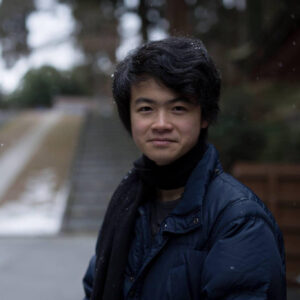 Adam He — Adam is a computational biologist and postdoctoral scholar in Genetics at Stanford, who builds interpretable machine learning models of how gene regulation is encoded in the genome. Adam’s project rebuilt a widely used analysis program called dREG, which detects cis-regulatory elements across the genome from the transcription patterns captured by nascent RNA sequencing, so regulatory activity and gene transcription can be profiled in the same experiment. Researchers had found the original unreliable because its back end was patched together from several different interfaces. His release is a Python package that includes a technical report and runbooks of the key profiling and benchmarking results, so others can adopt the new version with confidence.
Technical report (bioRxiv) · GitHub repository
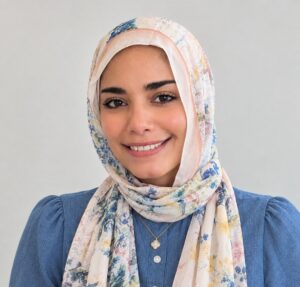 Afaf Abdelrahim — Afaf is a former Fulbright Scholar and PhD candidate in Microbiology at The Ohio State University, studying how agricultural management shapes soil microbial communities. Afaf’s project compared microbial populations in tilled and untilled farm soil. The data could neither confirm nor rule out her original hypothesis, but it is rich enough to be useful to others. She is releasing the full sequencing dataset and analysis code alongside a preprint.
Preprint and supplementary material (Zenodo) · Sequencing data and analysis code (Zenodo) · Analysis scripts (GitHub)
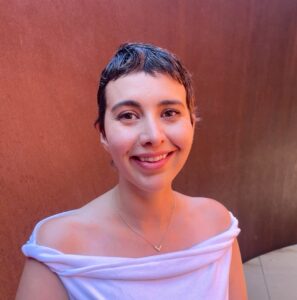 Alexandra-Maria Courtis Lee — Alexandra Courtis Lee is an applied physicist. Her work targets engineering nanosystems and exploring light-matter interactions. Alexandra has a strong interest in design and implementation of emerging sensing and communication technologies. Alexandra is publishing a solid result from her graduate research in nanoscience at UC Berkeley that went unpublished at the time.
Published materials (Zenodo community)
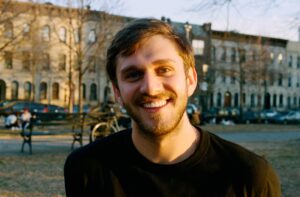 Andrew Bazley — Andrew is a PhD candidate in Liam Holt’s lab at NYU Langone, studying how cells control the physical properties of the endoplasmic reticulum. Andrew’s project built Ingence, an indexing and inference engine with a dashboard that helps researchers navigate large, messy, and disorganized internal data collections and see how their files relate to one another (a tool every lab could likely use). The release includes full documentation, a technical report, and supporting data drawn from four public repositories.
Ingence website · PyPI package · GitHub · Supplementary data (Zenodo)
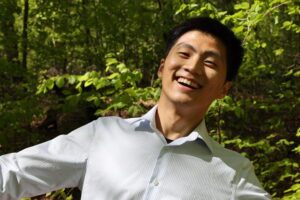 Chi-Yu Lee — Chi-Yu is a researcher in the Couzin-Fuchs Lab at the University of Konstanz, studying cognition through the visually guided marching behavior of desert locusts. Chi-Yu’s project, The Perceptual Decision-Making Behind Steering Behaviour in Swarming Locusts, grew out of earlier experiments that led to new methods. The release includes the curated and raw datasets, metadata, protocols, a manuscript, and source code.
Dataset, protocol, and manuscript (Zenodo) · Source code (GitHub)
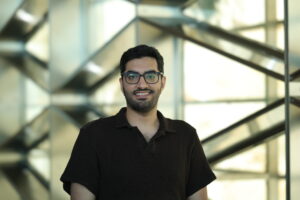 Faisal Alkhaldi — Faisal is a postdoc at KAUST working in computational and evolutionary biology, with a focus on genome evolution and regulatory DNA. Many labs use a commercial DNA ladder without knowing exactly what it contains. Faisal sequenced it, but a journal declined to publish the results over concerns about releasing proprietary information. He is now releasing the sequences openly.
Dataset (Zenodo) · GitHub repository · Preprint
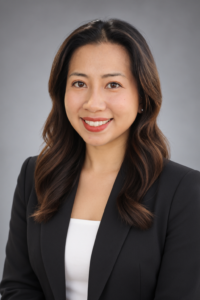 Gaokhia Yang — Gaokhia is a PhD candidate in Sam McKenzie’s lab at the University of New Mexico, studying how hippocampal cells synchronize to form memories. Gaokhia will publish a striking, previously unexplained result from her in vivo hippocampal recordings. The data will be released on Mendeley Data and Neurodata Without Borders.
This project is still in progress. Links will be added when it is published.
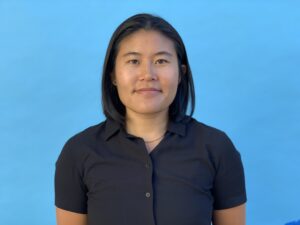 Galen Chuang — Galen is a PhD candidate in Vision Science at UC Berkeley, advised by Bruno Olshausen. She builds theoretical models of how the visual cortex processes natural scenes. Galen is publishing a negative result in which the experiment came out the opposite of what the model predicted.
This project is still in progress. Links will be added when it is published.
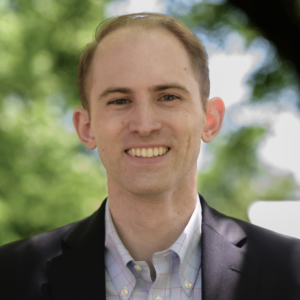 Matthew Howard — Matthew is a PhD candidate in the Manglik and Coyote-Maestas labs at UCSF, using deep mutational scanning to study the function and evolution of GPCRs, the largest family of drug targets in the human body. Matthew is releasing two high-quality datasets: a deep mutational scan of the receptor GPR161 and its constitutive activity, and measurements of basal cAMP signaling across the GPCRome. Together they provide background information on GPCR activity that researchers in basic science and drug design can build on. The release includes a preprint, count data, scores, and analysis scripts, with the mutational scores also deposited in MaveDB.
Preprint · Preprint archive (Zenodo) · GPR161 data and scripts (GitHub) · GPR161 data (Zenodo) · GPCRome data and scripts (GitHub) · GPCRome data (Zenodo) · DMS scores (MaveDB)
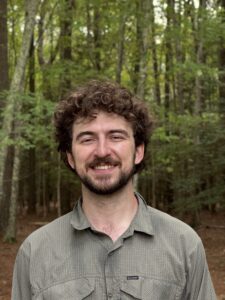 Riley Leff — Riley is a plant ecophysiologist finishing his PhD at George Washington University, building tools, datasets, and models to scale predictive power over forests. Riley is releasing a dataset and measurement methods from his work on plant ecophysiology, including a 3D measurement space for characterizing how plants respond to their environment. The release includes the data, a written analysis, a data guide, a step-by-step protocol, and a blog post reflecting on what he learned about measuring plants.
GitHub repository · Analysis · Data guide · Dataset (Zenodo) · Protocol (protocols.io) · Blog post