Foundation
Astera Foundation
The Astera Foundation centrally supports operational and financial aspects of Neuro-AI, Science, and Strategic Investments. This approach allows our more technical efforts to be run like ambitious, fast-paced start-ups led by critical specialized talent.

Our team also leads Astera’s Residency program, supports independent Fellows, explores and funds new opportunities, and drives events and other ecosystem-supporting efforts.

STRATEGIC INVESTMENTS

We think about grants and investments as a continuum rather than a binary.

Most foundations have an external grant-making function. At Astera, we also do grants when appropriate, but we believe we can increase philanthropic capital efficiency by structuring some of our programmatic expenditures as investments. With a grant, we lose 100% of our capital 100% of the time—with investments, sometimes we return capital that we can then redeploy for philanthropic purposes.

For-profit companies are a major vector for social and technological change, and a tool that nonprofits can use to achieve their charitable objectives. By removing the artificial constraints most foundations erect internally between grant-making and investment functions, we hope to make our existing philanthropic dollars go farther.

FELLOWS

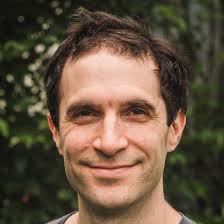
Occasionally, Astera identifies exceptional thinkers or creatives that we believe need flexibility and time to reach their potential. Below are our current Fellows who we typically support for several years so that they may pursue their projects with maximum autonomy.

Randy O’Reilly
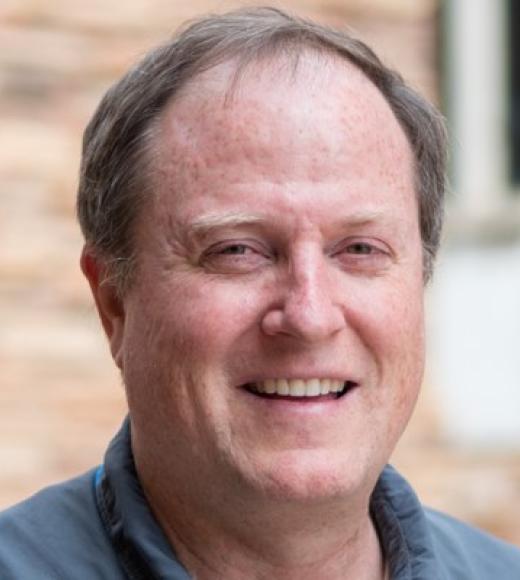
Dr. O’Reilly is Professor of Psychology, Computer Science, and the Center for Neuroscience at the University of California Davis. He has authored over 70 journal articles and an influential textbook on computational cognitive neuroscience. His work focuses on biologically-based computational models of learning mechanisms in different brain areas, including hippocampus, prefrontal cortex and basal ganglia, and posterior visual cortex. He has received significant funding from ONR, NIH, NSF, IARPA, and DARPA. He is a primary author of the Emergent neural network simulation environment. O’Reilly completed a postdoctoral position at the Massachusetts Institute of Technology, earned his M.S. and Ph.D. degrees in Psychology from Carnegie Mellon University and was awarded an A.B. degree with highest honors in Psychology from Harvard University. Learn more about Randy’s work.
Full bio
Michael Nielsen
Michael Nielsen is a scientist who helped pioneer quantum computing and modern open science. His interests include metascience, programmable matter, and tools for thought. He is the recent co-author of a book-length essay, “A Vision of Metascience”, investigating the ways in which the social processes of science can become self-improving. All his work is united by a broader interest in tools that help people think and create, individually and collectively. Learn more about Michael’s work.
Full bio
Steve Byrnes
Steve Byrnes is a Boston-area physicist working on Artificial General Intelligence safety research (a.k.a. “AI Alignment”), mostly via thinking about neuroscience and algorithms. Learn more about Steve’s work.
Full bio
Niko McCarty
Niko McCarty is a molecular bioengineer, former data journalist, and writer. His interests include biophysics, metascience, and visual tools for explaining complex ideas. He was a founding editor of Asimov Press, a biotechnology magazine, and is finishing a book about the quantified cell, called “Biology is a Burrito & Other Essays.” Learn more about Niko’s work.
Full bio
OPEN SCIENCE POLICY

We envision a future in which all research outputs are shared rapidly and openly. It is time to build anew. The science and scientists we support are expected to lead from the front by iterating on new approaches and living in the future today.

Astera does not support traditional journal publication practices, as this system is fundamentally unfit for this purpose and a relic of the past. As a forcing function for progress, Astera time and funds will not be used to contribute directly to journal articles. Radial will spearhead research and development for more future-forward frameworks and tools.

Read our full open science policy here