Today, the National Science Foundation (NSF) announced a partnership with the Astera Institute related to the first round of investment in building a national network of automated laboratory infrastructure, known as the Programmable Cloud Laboratories (PCL) Test Bed Initiative. The NSF will spend $380 million spread across 20 awardees to advance AI and automated instrumentation for scientific experimentation and data collection. The Astera Institute will contribute up to $20 million in matched investment and provide additional support and expertise to awardees to advance their open science practices to make their science more rapidly available, machine-readable, and reproducible.
This is the first time Astera is directly partnering with the federal government on a scientific program, but this partnership is not something we fell into by accident. Astera is continually looking for ways to promote and empower our approach to experimenting with how science is conducted and funded, including needed changes to scientific publishing that better and more quickly capture the full range of scientific outputs. Improvements on this front are not only enabled by AI but will also help fundamentally advance AI-enabled scientific discovery.
Astera’s own Open Science Policy espouses the need to get scientific information out quickly using publishing platforms and practices that focus on scientific utility rather than legacy journal systems that are optimized for and constrained by human limitations. To this end, Astera has built an ecosystem of investments and opportunities around open science, including:
- The Stacks, an open-access publishing platform we are building with the end-goal of experimenting with different ways of making it easier for scientists to generate, structure, and share reproducible data that are geared toward reuse
- Funded Programs such as the diffUSE Project, the Deliverome Project, and OpenADMET, which are all working to collect and openly publish AI-ready scientific information
- The Hidden Science Competition, a recently announced competition to encourage graduate students to publish useful research beyond the constraints of traditional peer-reviewed scientific journals
We view our collaboration with the NSF as an important step in adding to the ecosystem of open and rapidly available scientific information that will help to propel innovation forward. We are excited about this program and mode of partnership because PCLs create an opportunity to advance a more data-centric model of open science. Rather than treating data as a secondary output released only after an embargo and narrative-centric publication, the PCL Test Bed Program can support workflows in which well-structured, reusable data and metadata are shared rapidly and treated as valuable scientific outputs in their own right.
The instrumentation associated with the PCL Test Bed Program emphasizes automated experimentation in controlled environments, enabling researchers to design and test new tools for standardized data-generation processes and capture of high-quality metadata throughout each experimental workflow. This inherently makes experiments more reproducible and data more AI-ready.
These capabilities can uniquely enable rapid deposition into repositories and allow researchers and AI agents to more reliably discover, interpret, and reuse scientific outputs at scale while also supporting alternative publishing workflows organized around utility, reuse, and continuous deposition rather than a single final publication event.
Through this public-private collaboration, NSF, Astera, and the PCL Test Bed awardees can combine federal leadership, private support, and scientific expertise to make research outputs across fields more AI-ready, interoperable, and reusable—accelerating discovery, increasing the value of publicly funded research, and helping scientific advances translate more rapidly into societal benefit.
Astera recently hosted its first essay competition, focused around metascience. This competition was always more about starting a conversation than finding a bunch of perfect solutions. We wanted to hear from working researchers, not policy experts or administrators, about the structural problems they actually run into, described concretely enough that someone could do something about them. We also wanted that conversation to initiate a more public dialogue, which is why we required all submissions to be posted openly before being submitted to us.
We weren’t sure if this requirement would be a major blocker, but nearly 200 scientists openly published their ideas. Many of the essays attracted real engagement through comments sections and social media. We read every piece as well as the threads in which other researchers asked questions, offered suggestions, pushed back, or shared their own versions of the same problem. That was exactly what we were hoping to see. There’s something different about a scientist putting their name on a specific critique of how their field operates versus signing a letter or venting in a survey, and watching that happen across disciplines was genuinely encouraging.
Below we’re sharing some of the high level takeaways and the set of researchers that we are giving cash awards to. We’ve also reached out to a few submissions ourselves to explore potential paths forward that we could help support. And we’ve been sharing the essays with other funders and policymakers as well, in case that can help influence their strategic priorities at this critical moment in time.
By the numbers

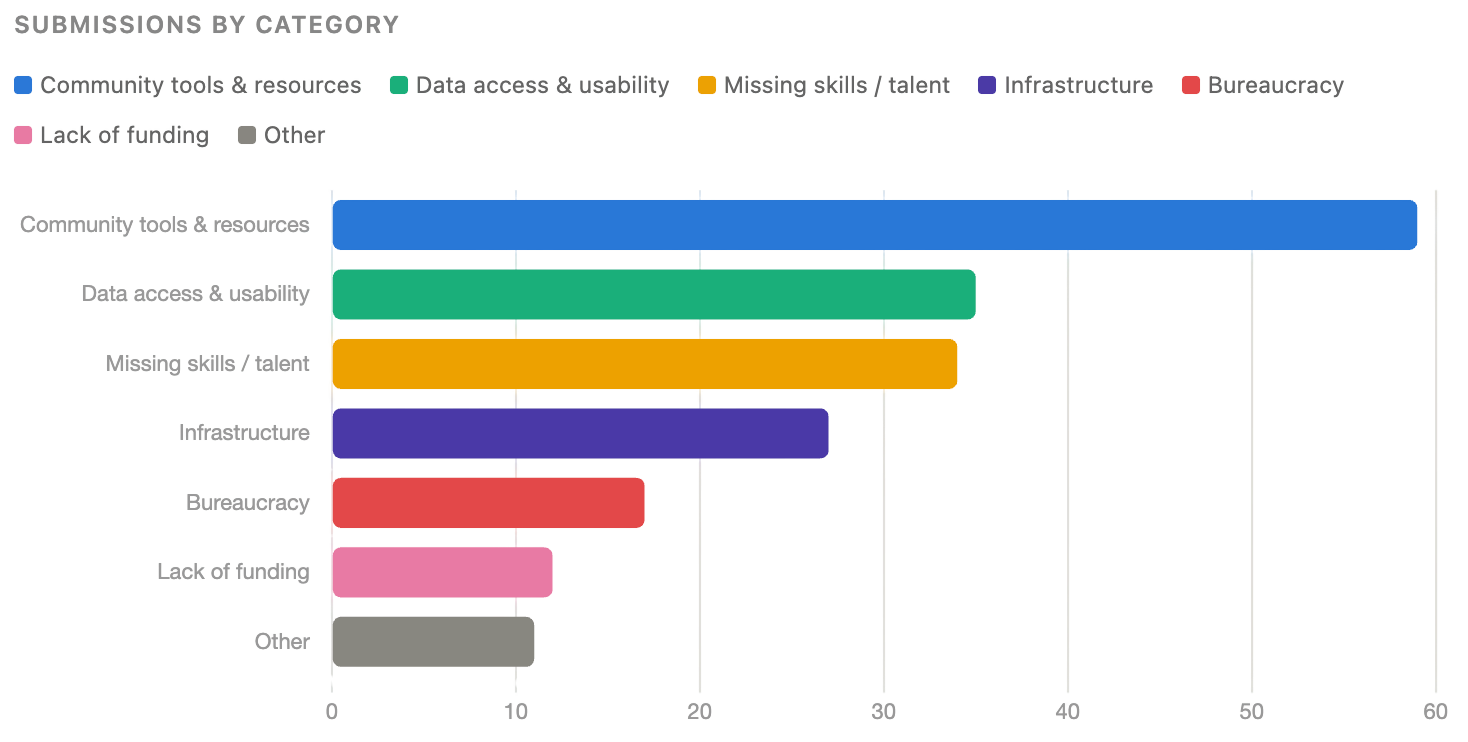
We initially organized the essays into different broad thematic categories, which was informative. Whatever scientists are most frustrated about right now, it isn’t only about roadblocks happening at the individual level. “Community tools and resources” was the most common at 30%. Essential infrastructure for sharing, maintaining, and building on existing work and data is also badly underdeveloped.
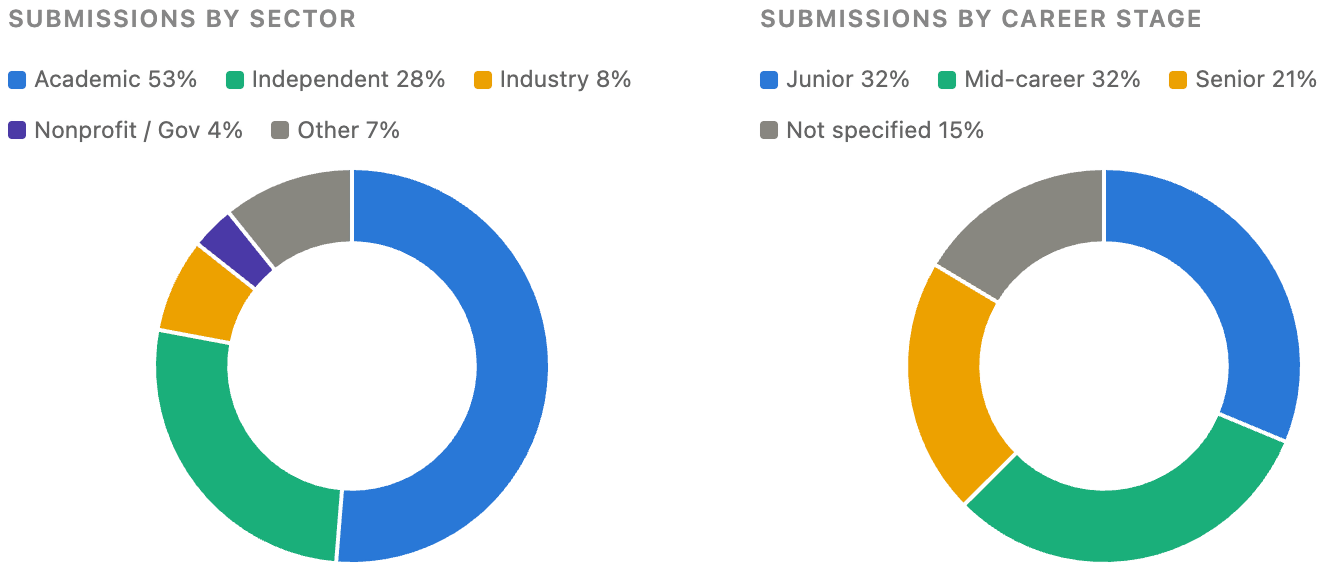
In terms of the submitters themselves, essays came from academic researchers (53%), independent researchers (28%), industry scientists (8%), and nonprofit and government researchers (4%). Junior and mid-career researchers each contributed 61 essays, compared to 41 from senior researchers. We were delighted to hear from so many people closer to the beginning of their careers who are optimistic about the opportunity for systemic change. Ultimately, while many of the proposed solutions would benefit from funding, their successful execution would need a more bottom-up approach from researchers on the ground.
A note on AI usage
We decided not to allow AI usage to factor into scoring, as we believe this is a new reality that can be embraced for good. Using AI as a writing tool can help researchers whose first language isn’t English, or who are simply too busy to agonize over prose. We think it probably helped propel ideas that might otherwise have been harder to submit or read.
After the competition and judging closed, we ran all submitted essays through Pangram as a retrospective check. Interestingly, we found that essays we triaged out earlier tended to show higher AI usage, while the finalist pool was mixed. We suspect that AI usage wasn’t always the cause of weaker essays, but possibly a correlate of them, i.e. submissions that didn’t have strong underlying ideas also seemed to rely more heavily on AI to flesh them out.
What scientists said
The top five broad themes below came from reading across all 195 essays.
1. Coordination failure
The most common frustration, cutting across nearly every category, was coordination failure. Not a shortage of ideas or data or even funding, but the absence of any mechanism for doing collectively what no individual lab or team can do alone. Valuable scientific assets like datasets, methods, null results, years of accumulated know-how lack shared infrastructure for sharing, maintaining, and learning from them. This category, which accounted for more than half the submissions, includes issues around community tools, data access, infrastructure. The essays in this bucket also tended to be unusually specific about what was missing and why, which was helpful for brainstorming fundable solutions.
Go here to see the catalog of submissions related to coordination failure →
2. Data issues
The state of scientific data came up enough to deserve its own category, especially given the increasing importance of data for any AI-related work. The main issues revolved around the quality and usability of the data itself (inconsistent formats, missing metadata, lack of standards and useful benchmarks). There’s a big need for more useful crosstalk between different datasets so that scientists can learn more from work across groups or measurement types. It’s clear that scientists have been navigating these problems for a long time, but the cost of not fixing them keeps going up. Before funding more data, what can we do to clean up and utilize what’s already available to us?
Go here to see the catalog of submissions related to data →
3. Scientific training
Training came up in 34 essays, not as a complaint about individual researchers but as an observation about what the PhD and postdoc pipeline systematically fails at, especially as the technological landscape changes. Specific skillsets that were repeatedly mentioned were ones around statistical rigor, computational analyses, cross-disciplinary fluency, and more connections to utility and translatability for greater impact.
Go here to see the catalog of submissions related to training →
4. Incomplete artifacts
The cost of invisibility was a fourth recurring thread. For example, untested ideas aren’t shared, null results often don’t get published, methods aren’t very reusable, and datasets get reused infrequently. A lot of the most actionable essays weren’t proposing new research programs; they were proposing the knowledge infrastructure that would make existing research compoundable.
Go here to see the catalog of submissions related to capturing the full scientific process →
5. Modernization
Finally, AI understandably came up a lot, and the essays we found most useful were the ones that treated it as a forcing function rather than the ultimate solution. The most compelling arguments were around structural gaps that have always existed and are now more costly to ignore and more possible to fix. If your data isn’t useful or interoperable, AI-assisted analysis doesn’t fix that. Without thinking more deeply about what data and data formats are most valuable to particular goals, scientists will still run into the same walls faster and potentially at greater cost.
Go here to see the catalog of submissions related to being more AI-ready →
Our review process
Below are a few notes about how we selected the finalist pool. Feel free to skip to the next section if you’d rather just read more about the winning submissions.
In short, we reviewed all 140 essays that passed initial triage against several dimensions:
- Was the submitter an active scientist? (defined as a researcher currently working on a novel research problem)
- How clearly and specifically the scientific bottleneck was described?
- How deeply the essay understood the structural reasons it persists beyond a single researcher or group?
- Is there a plausible pilot to test the hypothesis?
- And of course basic properties we requested, such as length and the existence of a public posting.
A note on format: the 3-page limit made author participation easier, but it also limited how developed the proposal could be. Articulating a deep problem and solution in three pages is hard, and in a few cases we could see the outlines of a stronger argument that required more space to flesh out. We did have to triage submissions that ran significantly longer, because comparing a 5-page essay with a 3-page one in a competition context isn’t fair. That said, we read all of them and may follow up on some of the longer ones that had compelling ideas.
The top 30 clustered into eight areas, which we presented to our judges for review and discussion: biological data standards and integration, clinical translation and healthcare (the single largest cluster), neuroscience methods and infrastructure, publication systems and knowledge, funding structures and research practice, data access and privacy barriers, interdisciplinary and cross-domain work, and specialized technical bottlenecks. Clinical translation being the largest was somewhat surprising; there were more specific, structurally sophisticated proposals about the gap between research findings and clinical practice than we expected.
The winners
When the panel finished its review, there wasn’t a clear top first-place essay. That wasn’t necessarily a failure of the judging, but perhaps a feature of the shorter length. We also learned that we embrace disagreement across judges, and our award structure should better reflect that.
Unsurprisingly, there was a lot of debate amongst our evaluators on what ideas could hold the most promise. Rather than award a first prize somewhat arbitrarily, we decided to forgo it and instead recognize more essays at the second and third prize level, which meant increasing our total prize budget. The eight essays below were the ones that most consistently combined a precise diagnosis with a credible path to doing something about it.
2nd Prize
Shaamil Karim
Shaamil is the founder of Atlas Discovery, which builds AI models to improve the success rate of drugs in clinical trials. Virtual cell models are all the rage right now, but they’re limited in a few ways. Shaamil discusses the need for including data that informs on clinical outcomes.
Jaeeon Lee
Jaeeon is a postdoctoral researcher at Harvard, studying how animals learn to generalize across changing environments, combining electrophysiology, fiber photometry, and computational modeling. Jaeeon discusses how systems neuroscience has accumulated a lot of competing theoretical frameworks, but no mechanism for forcing them to make predictions on the same data.
Peter Koo
Peter is an Associate Professor at Cold Spring Harbor Laboratory, where his lab develops interpretable machine learning systems for understanding gene regulation. Scientific fields often have the resources and the clear opportunities to build foundational shared datasets, but no mechanism for deciding collectively what to prioritize. Peter’s essay framed this as a governance problem rather than a funding problem.
Prashant Garg
Prashant is a Research Associate at Cambridge who studies science and innovation using machine learning, causal inference, and network science. As the scientific literature grows, informal peer networks are no longer an adequate mechanism for helping researchers figure out which questions are most worth working on. Prashant made a careful case for formal, statistically-grounded prioritization mechanisms.
Niveditha Iyer
Niveditha studied CS at Stanford and has worked on AI-assisted drug discovery at the Broad Institute and D.E. Shaw Research; she now works on continual learning and human-agent collaboration. Her proposal articulates how the scientific record systematically loses null results, which are really important for progress.
3rd Prize
Christina Ernst
Christina leads the Functional Genomics team at EMBL’s European Bioinformatics Institute, where she and her team build and maintain the open-access infrastructure she’s writing about fixing. Functional genomics keeps generating expensive data that effectively disappears, not because of scientific failure but because the coordination and standards infrastructure to make it reusable isn’t there. Christina mapped the specific mechanisms behind this and proposed concrete remedies.
Matthew Leighton
Matthew is a postdoctoral fellow at Yale’s Quantitative Biology Institute, applying tools from physics and mathematics to complex problems in biology. His essay explains how funding structures and incentives often push researchers to stay within their technical domains, but there could be more creative ways to explicitly enable multidisciplinary collaborations beyond box-checking exercises that are typical of many grants.
Harshu Musunuri
Harshu is a synthetic biologist and MD-PhD candidate at UCSF, working on bacteriophage engineering and the immune-microbiome interface. Her essay proposed that understanding the microbial roots of chronic disease could move medicine toward prevention. She believes that there could be a causal link between common pathogens and a range of chronic diseases, and reimagining funding and work around this goal could open up new critical insights.
What comes next
This essay competition generated an amazing public catalogue of concrete cases where there could be fundable solutions to metascience challenges. We’re still working through what that means for our own funding priorities at Astera. But the volume and specificity of what came in was enough to move our thinking on a few things.
All 186 essays whose authors consented to sharing are linked on our website. We’re grateful for their willingness to do this, and we have shared their organized entries with other funders and policy advocates. We will continue to pay attention to the dialogue happening through and around the submissions (yes, we’re reading comment sections!). We are also thinking through what the next iteration of this effort might look like in terms of another competition or a funding call, so stay tuned on that front.
Drug candidates fail in the clinic not because they miss their target, but because of ADMET — absorption, distribution, metabolism, excretion, and toxicity. Pat Walters has spent 30 years watching this happen. Now, as Chief Scientist at OpenADMET, he’s building the open data infrastructure to fix it.
Pat argues that data — not better algorithms — is the real bottleneck in applying AI to drug discovery, and explains why you can’t just pull reliable ADMET data from the literature. He walks through OpenADMET’s approach: generating large, consistent, publicly available datasets; running blind prediction challenges (370 groups participated in their first); and integrating structural biology to move from black-box models to mechanistic understanding.
Links
- OpenADMET: https://openadmet.org/
- Practical Cheminformatics: https://patwalters.github.io
When Astera launched its life sciences division, Radial, earlier this year, we set out to reimagine how life science research happens at a systems level. Today we are announcing $5 million in seed funding to The Deliverome Project, a new fit-for-purpose nonprofit research organization building the toolkit to unlock a long-standing bottleneck in precision medicines: targeted delivery.
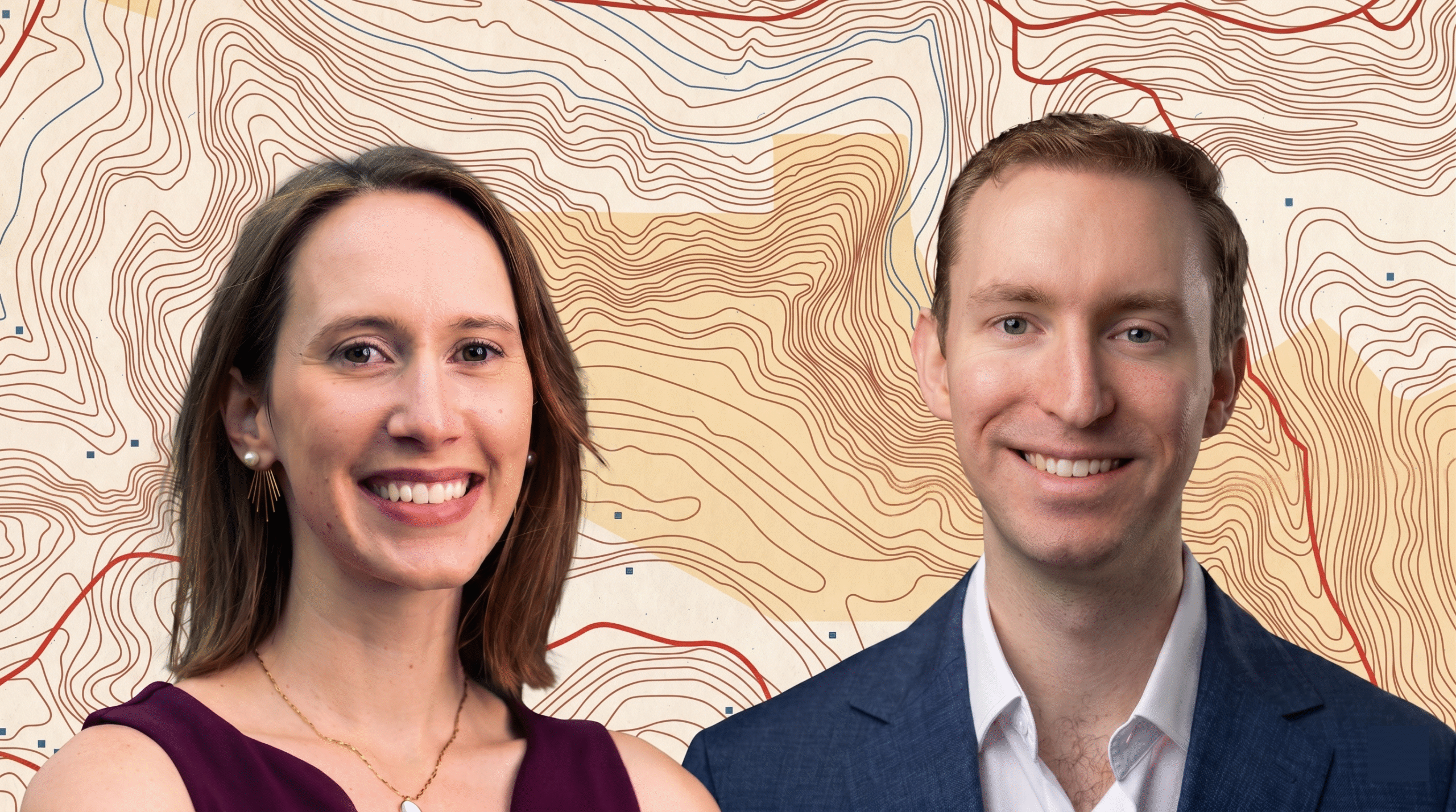
The Deliverome Project will create the first comprehensive, open-source, multimodal atlas of proteins on the surface of human cells. Precision medicine has long needed a high-quality, comprehensive dataset that not only catalogs these biomolecules’ specificity and abundance, but also characterizes their ability to traffic cargo into human tissues. But no one group has had the right combination of technology, institutional structure, and incentives to pull it off. The Deliverome, led by cofounders Becca Carlson and Bobby Hollingsworth, are up for the challenge.
Precision medicine’s missing data problem
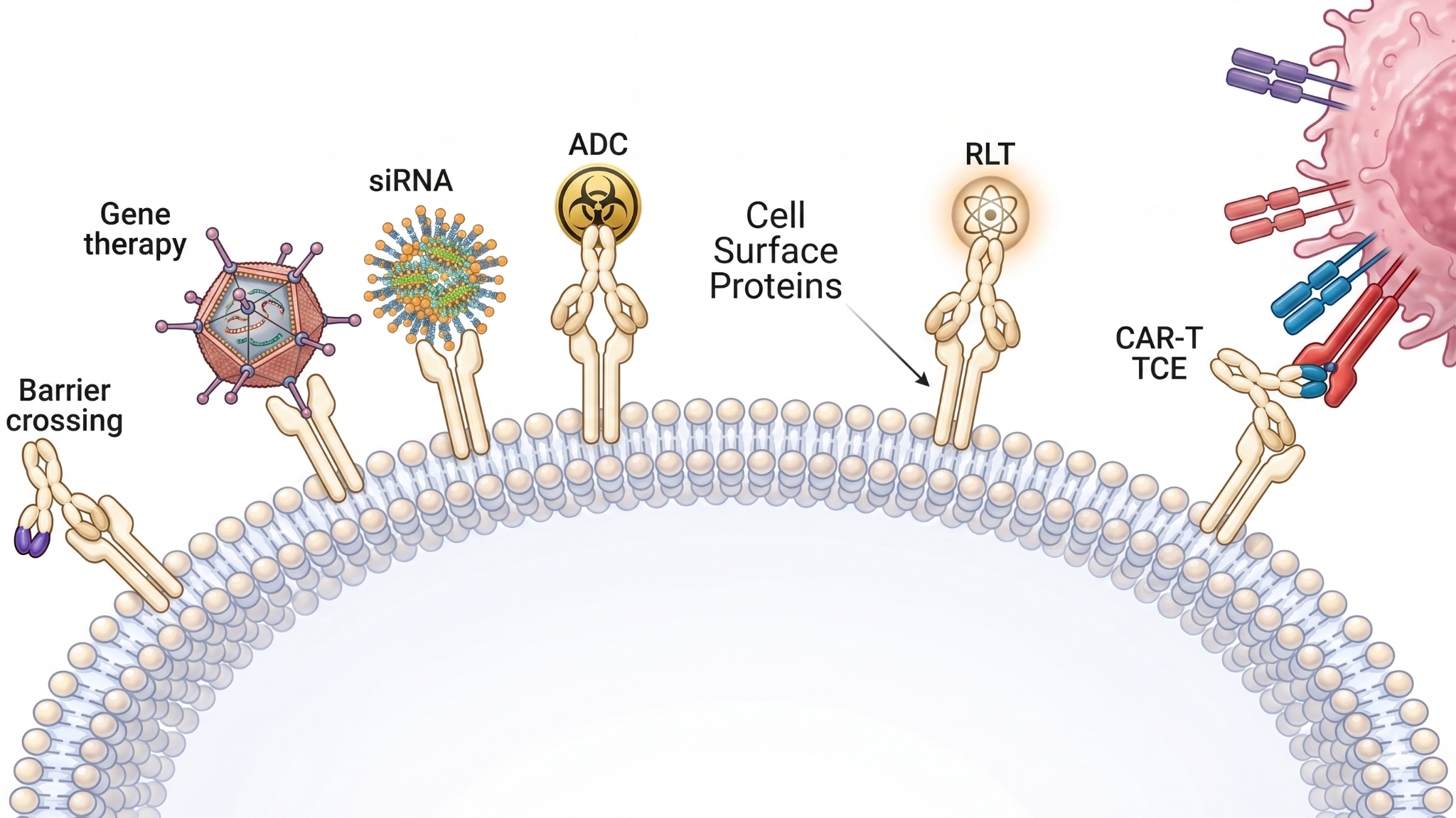
The payloads of precision medicine have never been more sophisticated. Today’s scientists can engineer CAR-T therapies for wiping out blood cancers; gene-editing to permanently correct heritable disease; RNA medicines that block harmful proteins from forming, and antibody-drug conjugates that destroy cancer cells while sparing healthy tissue. But precision medicine’s promise rests on our ability to get those revolutionary payloads to exactly the right cells in the body. Delivering cutting-edge therapy means inscribing the correct molecular address. And here, the field is flying blind.
The overwhelming majority of drugs in development today cluster around a small set of known, validated surface targets. That clustering isn’t a choice; it’s a data gap. Human tissues carry thousands of individual surface proteins; the vast majority (and their millions of pairwise combinations) remain undiscovered. Even for familiar proteins, biologists have little sense of how abundant they are across different cell types, or how they circulate cargo in and out of the cell. Neither a scientist nor an AI model can reliably predict which surface proteins will enable safe, effective delivery to a given disease.
A purpose-built, open-science solution
The Deliverome team will atlas the presence and nature of cell surface proteins using two increasingly sophisticated techniques. The first is mass spectrometry, which will measure surface protein abundance in different human tissue; the second will determine which proteins support cellular internalization of cargo. Both approaches are high-throughput by design. Deliverome will be able to interrogate thousands of surface proteins simultaneously.
The seed funding we are announcing today will allow the team to build out and validate the necessary technology platforms, hire a team, begin sample acquisition, set up computational infrastructure, and start sharing data. Any surface target the Deliverome maps may be the missing link for the next transformative therapy.
Deliverome’s methods and findings will all be released openly. Expect to find protocols, reagents, raw data, and analytical outputs shared continuously in AI-ready formats without waiting for journal publication cycles and with an eye towards reuse. The goal is to make the data generative for the entire ecosystem — every academic lab, every biotech company, every AI model building the next generation of precision medicines.
Why a dedicated nonprofit org is the right structure
Precision medicine’s glaring data gap on surface proteins is a too-common failure of the market. Pharma companies that build surface protein data keep it proprietary and narrowly focused. Academic labs lack the scale, coordination and incentives to execute at the required level. Venture-backed startups face immediate pressure to narrow to one therapeutic area, protect data as IP, and deprioritize the platform as they advance their first clinical asset. Everyone would benefit from a high-quality, comprehensive cell-surface protein atlas, but no one in the current system will build it.
The Deliverome Project requires the resources and freedom to pursue the full problem space: industrial-scale execution combined with an open science mandate. Radial’s mission is to experiment with what science gets done, how science is organized, and what science produces. Structuring this project as an FRO allows the Deliverome Project to meet each of these ambitions.
Ambitious science requires entrepreneurial, technical founders
The Deliverome’s cofounders Becca and Bobby each have a rare combination of deep technical fluency in experimental platforms, genuine conviction to open science, and the drive to build an organization from scratch. They bring with them years of experience in functional genomics and proteomics, cell biology and structural biology, platform building and target identification.
Becca’s PhD in the Blainey and Hacohen labs at the Broad Institute led her to develop single-cell genetic analyses called optical pooled screens. She then moved into industry to scale science into useful technologies, first at a spatial biology startup and then in venture creation at Flagship Pioneering. Time after time, she noticed the same obstacle: platform biotechs had powerful delivery technologies, but their target data was too weak to actually deploy a therapy.
Bobby’s path is complementary. His doctoral work with Hao Wu at Harvard investigated innate immunity with cryo-EM; and his postdoc with Wade Harper added spatial proteomics to his repertoire. Before Arena BioWorks’ closure last year, Bobby worked on their team identifying novel surface targets across disease areas. But beyond his technical background, Bobby’s long-standing commitment to open science inspired us. As a postdoc, he shared work publicly outside even traditional preprint infrastructure; at Arena BioWorks, he pushed the company toward a more open posture on their science; and recently when receiving the Experiment Foundation’s Beyond the Journal award, he responded to the news simply with “I don’t need the money, this is how I’d operate anyway.” That orientation is central to the Deliverome Project’s mission.
Both Becca and Bobby’s careers have been building toward this project. We’ve been impressed by their conviction, their speed, their ability to absorb and incorporate feedback, and their fundamental orientation toward building useful science that works for everyone. Additionally, Becca and Bobby’s detours through the applied world of platform biotech and drug discovery are a feature, not a bug. That experience sharpens their sense of exactly what’s missing and why it matters. There are very few places designed to support researchers who want to go back to the sandbox and address fundamental problems with this kind of clarity. We think that’s the profile this work demands, and it won’t be the last time we look for founders like them.
What comes next
Becca, Bobby, and their team will not be able to solve this problem alone. The Deliverome Project will require partners across areas such as human tissue sample sourcing, methods development, computational biology, and the broader biopharma and academic ecosystem. Inherent to the open science commitment and desire to build a truly useful resource is an appetite for feedback from the research community.
If you’re a researcher working on precision delivery, a clinician with access to annotated tissue samples, a company with relevant platform capabilities, a scientist building off of our open work, or a funder who believes public-good data infrastructure in biomedicine deserves more serious investment, we want to hear from you.
To learn more about The Deliverome Project, visit deliverome.org
Get in touch at contact@deliverome.org
Thousands of feet below the surface of the Pacific Ocean, a sea sponge produces threads that lattice together into a translucent skeleton. A foot-long glass house of their own design. When Tim McGee, now a resident at Astera Institute, learned about this creature — the Venus flower basket — in 2003, it changed his career. McGee left a job in pharma to work with a lab studying how sea sponges could do such a thing. It was an amazing feat of manufacturing completely unlike anything human technology could do.
“It just kind of melted my brain that at the bottom of the ocean there’s these creatures that are spinning glass, whereas we have forges at thousands of degrees,” McGee said. “It’d be amazing if we could do that.”
McGee has since devoted his career to learning from nature’s ingenuity and the power of proteins.
When nature assembles proteins carefully at the molecular scale, it creates strong, responsive, and smart fibers, because proteins can sense and respond to their environment. It’s a sort of material intelligence. But our manufacturing falls short. Our usual fibers don’t have the variable attributes that proteins do; and when we do try to build with proteins, our fiber assembling processes fall far short of nature.
We cannot yet program the exact combination of properties we need, be it strength, conductivity, transparency, and so on. Think of robots actuated by fibers that move like our own ligaments and compute a sense of touch. “How can proteins basically be a way for us to make almost anything?” McGee said. In his residency with Astera, he is working toward that future.
McGee’s Impossible Fibers program is creating a manufacturing technique to make protein fibers that more closely mimic nature’s tactics.
“We know nature can create tunable structures,” McGee said. “The question is, how do we start to get there? And how can we get there quicker?”
The problem with traditional fiber spinning
If you want to spin fibers out of proteins today, your options are limited. Manufacturers either melt and resolidify polymers (melt spinning) or extrude polymers from one solution into a bath that coagulates them into thin filaments (wet spinning). Neither method allows for adequate molecular assembly of proteins. They instead essentially force a material into a particular alignment. Whatever special attributes they need must then come from the usual chemistry levers: high or low molecular weight polymers and potentially toxic additives introduced after spinning.
But proteins are too finicky for this approach. Proteins want to align and bond in their own particular way. “The way that we manufacture today is akin to just supergluing everything together and throwing it out there, as opposed to actually assembling the Lego bricks,” McGee said.
With Impossible Fibers, McGee is seeking more control over how proteins assemble in space and time.
More precise control with encapsulation
Impossible Fibers’ proposed system begins with “encapsulation,” inspired by how creatures like spiders, mussels, and velvet worms store, sequence, and trigger protein assembly.
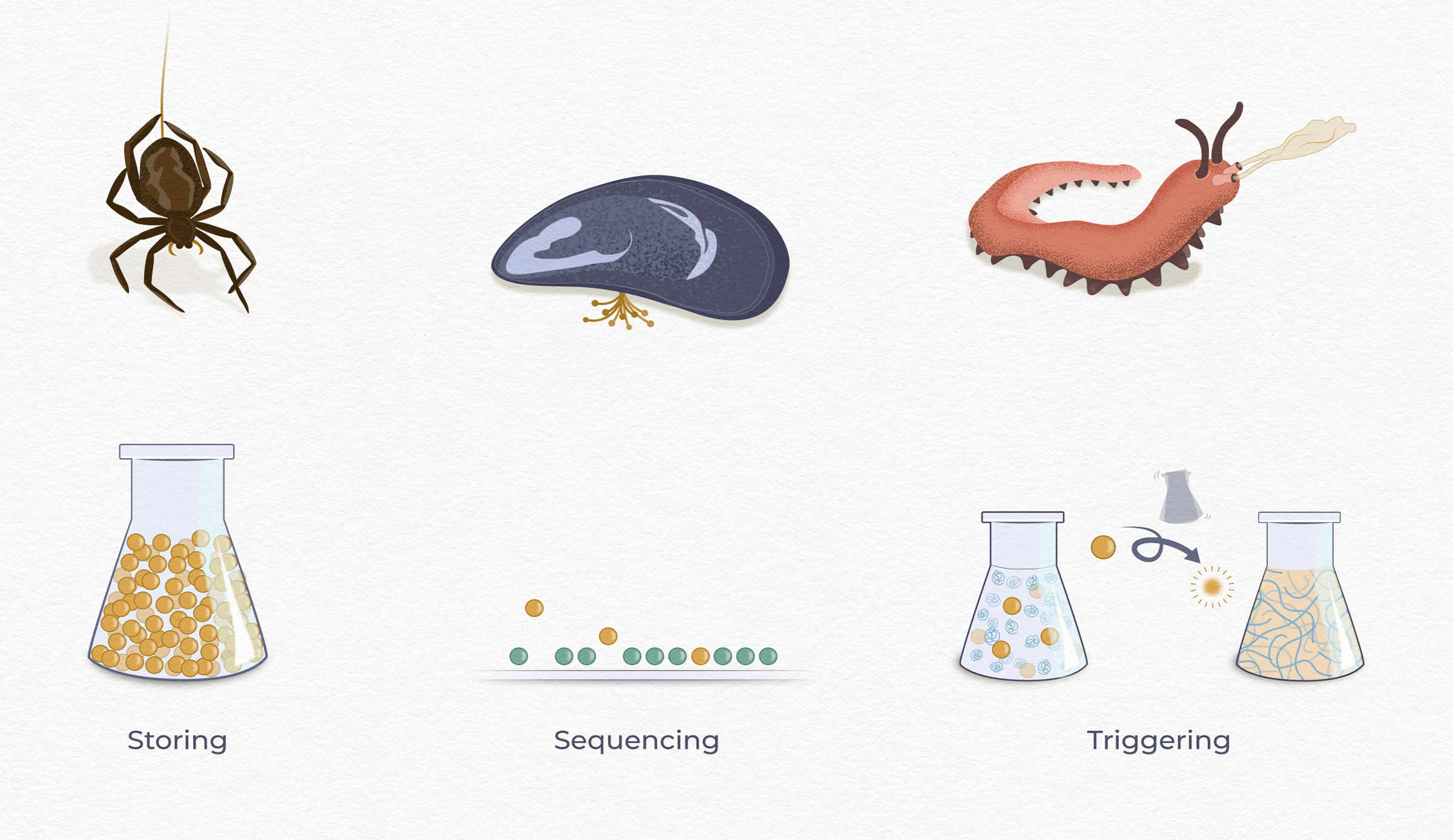
The team is prototyping a three-part platform. First, a microfluidic device encapsulates small droplets of dissolved proteins, transforming them into stable droplets. The droplets can then be arranged, sorted, manipulated and programmed into desired arrangements, like beads on a string that program how the material is assembled. A third device then bursts the droplets and precisely assembled fibers from its proteins.
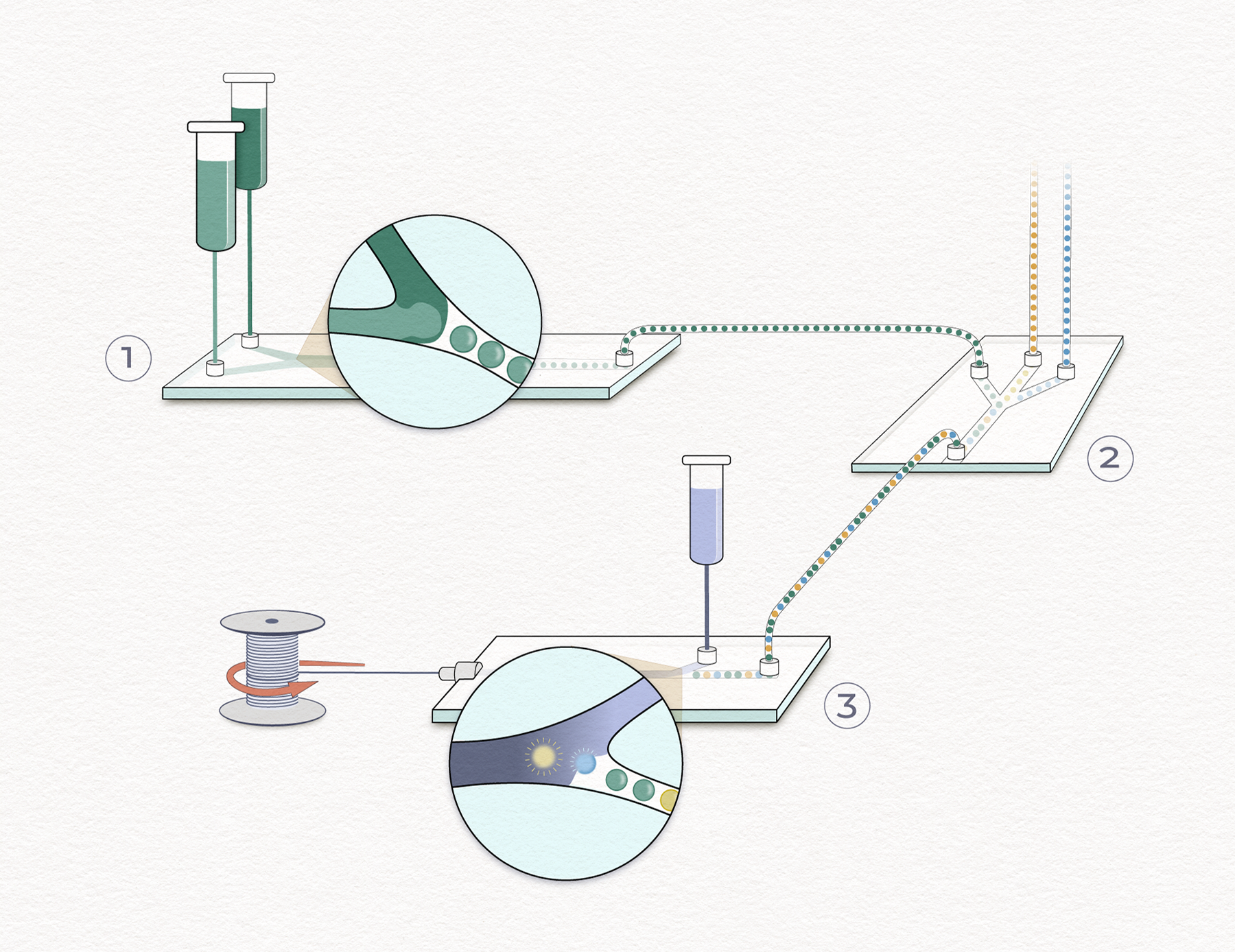
“You can pop them at the right moment,” McGee said. “So we do reactions in this microfluidic device, and then we pull a fiber out of the other end.”
This is the kind of control that scientists often see in nature’s high performance fibers.
Encapsulation gives unprecedented flexibility
McGee envisions the same encapsulation platform for programming fibers out of any number of different proteins. And that generalizability is important.
Fibers are everywhere, and the need for high performing multi-functional fibers is everywhere as well. Companies have spent decades trying to engineer spider silk for strong, lightweight materials. And the upside is about more than strength. AI companies would benefit from hollow core optical fibers which transmit data through narrow tunnels of air, rather than glass; roboticists would benefit from strain-sensing and conductive filaments which could unlock proprioception and more human-like function. “Whether it’s optical, electrical, mechanical, chemical, or just adaptable,” McGee said, “All those things you can do with proteins.”
It’s unrealistic to expect a one-size-fits-all fiber spinning platform. But this type of encapsulation platform gives manufacturers an unprecedented generalized step inspired by nature to begin protein assembly.
Why here
Impossible Fibers is following in the footsteps of prior Astera residents, by identifying a daunting bottleneck that, if resolved, will ripple transformation across tech sectors that would not have the opportunity to innovate so drastically.
Impossible fibers is the quintessential project that falls in the gap between academia and industry. Academic labs have shared some of Impossible Fibers’ ideas, but seeing that vision through requires a scope and scale beyond academia’s abilities. On the other hand, venture investors won’t touch a high-risk capital intensive project without a clear, focused application. But that’s precisely why previous protein fiber groups have failed: they are forced to use existing manufacturing in order to fit existing markets, effectively abandoning the unexplored terrain that made proteins interesting in the first place. The unique advantage of Astera is that philanthropic resources can de-risk these “boring” process components overlooked by traditional investment, while also taking bigger swings than what’s possible in academia. It’s the starting point for investors to see what might be possible if we invested in novel manufacturing through Open Science. Other labs or start-ups can then build on our work to advance the thousands of possible areas of focus.
“It’s kind of a rare program where they give you a salary and a stipend to build a lab to let you build out this capability,” McGee said. As an Astera Resident, McGee’s Impossible Fibers program will challenge old ideas of what fibers can be and what they can do. Multifunctional fibers could trigger a new era in robotics and unlock more durable and effective medical devices. McGee expects protein fibers to find use as implantable brain electrodes that more reliably match the soft, strong, conductive environment of nervous tissues.
Building openly, for now and the future
As Impossible Fibers works towards catalyzing fiber tech and new applications in the year with Astera, they are designing with open science in mind. The team is developing new microfluidic designs, new tools to prototype fiber spinning, and new methods to assess the protein fibers they spin. “Everything we are working on is open,” McGee said. “We believe this can foster a community of people to explore this exciting new frontier.
Why is this technological transition possible today, rather than five years ago or five years from now? For one, laser etching and 3D printing costs have decreased. But perhaps more important is the feedstock. We can make larger quantities of biopolymers — the building blocks for programmable materials — than ever before. Engineered bacteria can produce interesting proteins found elsewhere (and nowhere) in nature. Prototyping that previously would require millions of dollars and years of development can now be tested in weeks for tens of thousands.
It’s therefore urgent that we invent new manufacturing processes for this next generation of materials.
McGee hopes the work will lead to predictive algorithms to assist in biomaterial design. “It’s the vision of the far future,” McGee said, “of being able to ask an AI, I want a material with these properties, give me the protein and the manufacturing sequence to enable that to happen.”
This potential to master protein design may even allow us to surpass what nature can do. “Nature is not a perfect solution,” he said. Evolution is a messy, path-dependent process of incremental steps. The goal of Impossible Fibers is to extract the math, physics, and chemistry behind the most clever phenomena. “If we want to make the future faster, we have to figure out how to compress what we can learn from the natural world into our own technologies.”
Want to dig deeper? Visit the impossiblefibers.com and follow along at iflab.substack.com
A new era of power generation is coming with nuclear fusion. Fusion technology mimics the enormous flux of energy powering the core of the stars like our Sun. Small atoms smash together under such immense pressure and temperature that they fuse into heavier elements. The process liberates roughly four million times more energy per kilogram than burning fossil fuels.
Make no mistake: Fusion is a hard problem requiring immense innovation. But the energetic upside is compelling. If fusion power can reach 1 cent per kilowatt-hour — 5 to 10 times cheaper than today’s cheapest new-build power generation — it may enable other world-altering technologies, from affordable desalination and interplanetary space travel, to other leaps we can’t yet readily imagine.
Dozens of companies and governments around the world are betting on nuclear fusion to revolutionize how we power life on Earth. But despite $10 billion of investment, the road to these transformative promises is economically cloudy.
The interesting question is not really what life could look like with one cent electricity, but rather what sequence of events would make it possible? What needs to be true to achieve 1¢/kWh?
“It’s a wildly aggressive target,” says Damien Scott, a technologist working on fusion systems. “It may well be implausible.”
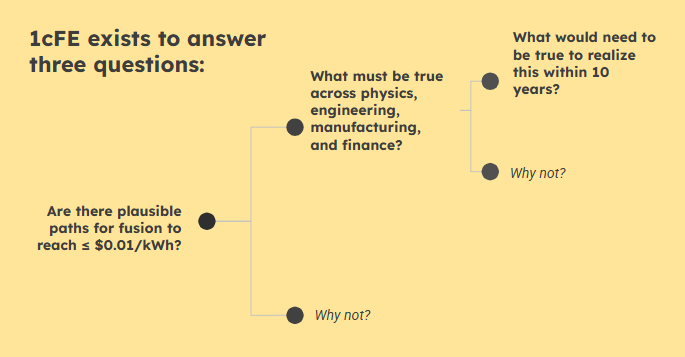
In 2025, Scott began a residency at Astera Institute to lead 1cFE, an initiative that models the potential costs of fusion energy, and determines whether (and how) any technologies have a path to 1¢/kWh electricity within 10 years. Scott’s goal is to understand what constraints limit the various scientific routes toward sub-cent fusion, resolving to make them visible before years of effort and billions more dollars pour in.
Many paths to cleaner energy
Scott’s interest in electricity came out of necessity. He spent his childhood years living off the grid on a remote farm in Botswana, forty miles from the nearest gas station. The wet seasons could wash out the roads, cutting them off further. Scott and his family learned to improvise. They drilled wells for their water, and jerry-rigged 1990s-era solar panels for power.
He later studied concentrated solar thermal power while earning a degree in applied physics at the University of Sydney, gravitating toward engineering projects that worked under harsh conditions. This led him to Williams Racing in Formula 1, where he helped create the team’s applied technology division. It was an extreme environment for engineering. F1 requires rapid iteration, unforgiving constraints, with constant high-stakes (and public) feedback. Scott went on to found an autonomous and electric vehicle fleet simulation and optimization startup, Marain. And these experiences crystallized his philosophy as a technologist: Before building expensive hardware, model enough to reduce uncertainty. In other words, Model twice. Spend once.
Marain was acquired by General Motors. After spending two years at GM Scott departed and began exploring what problems to work on next. “I kept coming back to fusion,” he says.
He studied the landscape and was struck by the quality of privately funded engineering teams in the space. The technologies were promising. But he couldn’t find a clear measure of how promising. “If we take the culmination of the last 75-80 years,” he wondered, “if this all goes according to plan—how cheap could it be?”
Wayfinding in fusion
Right now, the future of fusion is like a summit hike through dense forest. Many paths exist, some more delineated than others thanks to the hard work and good fortune of early trailblazers. But each tortuous trail faces unique obstacles.
In order to reach the right extreme conditions to achieve fusion on Earth, some use lasers to rapidly compress fuel. Other technologies use magnets to confine plasma. Nuclear fusion releases energy as electromagnetic radiation, fast moving ions and neutrons. What researchers do with that resulting burst of energy also varies. Many proposed fusion plants resemble current fission plants: They generate heat, boil water, spin turbines, and funnel electricity into the grid. Alternatively, a new model for plants could convert the energy of fast moving ions directly into electricity: plasma expands against the magnetic field that’s confining it, which induces a current.
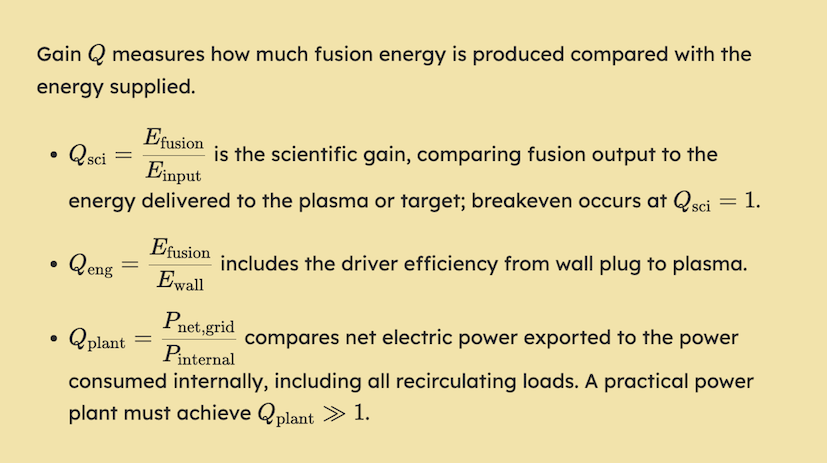
Two feasibility metrics are particularly important when comparing technologies at the experimental stage: the triple product and the gain. Triple product represents the threshold plasma density, temperature, and confinement time required for a technology to trigger fusion Gain measures how much more energy a technology creates with fusion compared to the amount of energy it needs to start and sustain it. Small-scale experiments at Lawrence Livermore National Lab have yielded greater energy (8.6 MJ) than that delivered by a laser (2.08 MJ). This represents a theoretical, “scientific gain,” as opposed to the engineering gain or “plant gain,” for a whole facility. The inefficiency of the Livermore Lab laser makes it so that the system still uses much more energy than it generates.
As an Astera resident, Scott’s 1cFE is building open-source cost models that compare these many paths on the basis of their potential upsides and constraints. For example, analyses peg the floor of fusion systems relying on steam generation at 0.5¢/kWh. “The cost of steam turbine processes really constrains,” Scott says. “It may be harder for fusion approaches that generate heat to get to that one cent target.” Direct energy conversion bypasses the costs of steam boilers, but it requires different fuels and less well-studied physics and engineering.
Tradeoffs like this are not necessarily dealbreakers. No leading technologies have yet been ruled out of the one-cent pursuit. But the optimal approach at this point in fusion’s development is to carefully scrutinize how we’ll reach one cent and beyond. And that, according to Scott, requires working backwards.
Frontier backcasting
As of 2025, no private company has demonstrated scientific gain above 1. Some are approaching, with forecasts of hitting scientific breakeven next year. We are seeing new facilities break ground every year with private-public partnerships. Several companies claim they will have carbon-free power plants online before 2030, and tech giants like Google and Microsoft have already signed power purchase agreements.
The hope to finally deliver fusion electricity after decades of work has never been higher, Scott says, but his ambitions aim even higher. 1cFE’s role is to investigate the plausibility of sub-1¢/kWh fusion power. “Solar is a very instructive analogy, because the fuel cost is zero, very similar to fusion where the fuel cost is minimal,” Scott says. “We can do solar plus storage at 5¢/kWh, and that is getting cheaper.” The key innovation lies in how to manufacture the device that produces electricity not just cheaply, but cheaper than anything else.
Hitting 10¢/kWh would make fusion competitive in some markets. At 5¢/kWh, the market balloons toward profound change. But at or below 1¢/kWh is where the more profound changes can emerge — it’s an anchor that exposes the limits facing fusion technology.
1cFE begins with this target, then asks what would have to be true — in physics and economics — for that world to exist. This so-called “frontier backcasting” reveals constraints and the required levers.
Frontier backcasting helps focus a subset of the field’s research, investment, and policy, toward the most aggressive end goals by exposing what’s actually possible. “It is common to overestimate what is possible in one year and underestimate what is possible in ten,” Scott says. Consider the fallen cost of launching payloads into low Earth orbit. Between 2000 and 2010, LEO launches hovered between $8,000 and $12,000 per kilogram. SpaceX sought to lower costs by an order of magnitude. But this would not be possible with incremental innovations. It was only possible with unprecedented reusability. Their bold target forced them to consider an entirely different gameplan, and today reusable rockets have already cut costs by a factor of 10.
“Which levers are unavoidable to reach 1¢/kWh?” Scott asks. “We will use this target in fusion to expose how far the levers must move, and in what order.”
Estimating uncertainty
1cFE will help compare different approaches to reaching cheap electricity. The current landscape of proposals includes mature technologies with relatively predictable lifetime costs as well as much newer technologies that are harder to quantify.
So how will the team quantify approaches comprising such varying degrees of uncertainty?
The first layer of modeling estimates capital cost, interest, operational costs, and learning rates — the change in cost that comes over time with more production experience. They also assign a “technology readiness level” to subsystems or components. “If it’s a laser that has only been made once, that’s on the lower end of the TRL scale. Whereas, if you are reusing fast-switching capacitors found in a bunch of other industries, that’s much higher.”
But what about components that simply don’t yet exist? Although the cost of new concepts that depend on not-yet-invented technology are more difficult to quantify, 1cFE’s modeling can benefit here too. Rather than guessing what unproven components will cost, the team inverts the question: working backwards reveals what those components would need to cost to make new ideas viable. “How cheap does your accelerator need to be?” Scott says. “If it’s half-mile long, that is going to propagate into the cost of your land.”
Outputs
In a one-year residency with Astera, Scott is leading a team with expertise in physics, systems engineering and software to create models, outline assumptions, and identify both promising and discouraging roadmaps.
Like other Astera residencies, 1cFE aims to unlock a future of abundance and human flourishing. The typical Astera project leans into the messy uncertainties about how technology will evolve. For 1cFE, this means applying rigorous cost analysis and technological assessments to expose a plausible path to abundant energy. This is a path to innovation that has too often been neglected in favor of incremental improvements. And 1cFE’s approach is open-science from idea to result: They will publish everything, including negative results as well as fully transparent corrections. “We encourage others to find errors, and we will correct them as we go,” Scott says. “The commitment is to keep the record honest and not just open.”
Later this year, 1cFE will deliver the first systematic, open-source techno-economic comparison of fusion pathways against a sub-cent target. They will publish datasets, a report benchmarking new AI tools, and reproducible code. Scott envisions a public dataset listing 10 to 15 fusion concepts and the technoeconomic conditions required for each of them to reach 1¢/kWh.
They will run two workstreams in parallel: backcasting to the technical, industrial, and policy constraints implied by a one cent target; and testing where AI can accelerate the design-build-test-learn cycle.
Researchers have already published a lot of useful fusion information, but data is largely fragmented across formats that don’t lend themselves to quantitative, and prospective comparisons. 1cFE is building the missing layer: a dynamic database of levelized costs across approaches. The team’s technoeconomic assessment will make it cheaper to add concepts, rerun analyses, and compare approaches side-by-side.
For companies interested in targeting 1¢/kWh, 1cFE’s work will help identify a path forward. The goal is not to prove out or favor any particular confinement system or fuel choice; it is to slash uncertainty so that technologists and investors pursuing ultra low cost fusion can direct resources into the ideas most likely to radically change humanity.
“Fusion is frequently described as clean, limitless, and virtually free,” Scott says. “Those words need to be quantified.”
Follow the project: 1cfe.substack.com | github.com/1cFE | @1cfenergy on X
Today, Astera Institute is launching Radial, a division which reimagines how life sciences research happens at a systems level. Radial will be led by Becky Pferdehirt as CEO. We are committing up to $500M over the next decade to expand our build-test-learn approach to scientific infrastructure and practices.
How we fund, do, and build upon science in the U.S. has long needed an update. We’re at a historic inflection point with AI acting as a forcing function on biology — not because it will immediately solve hard problems, but because its demands and widespread adoption will, increasingly, expose how unfit for purpose our scientific infrastructure actually is. We also have more tools than ever before to find new solutions. But positive change isn’t inevitable, which is why Astera is expanding its efforts through Radial.
Radial is grounded in two key beliefs. First, scientific practices for impactful discovery—from how we design methods to how new knowledge is shared and translated into real-world use—need to be rebuilt from the ground up. Second, it’s very difficult to go about this without deliberate iteration through active research efforts. In other words, we need to experiment with how science is done through actual science and scientists.
Our starting framework
Radial is going to try a broader range of things in the beginning that will drive our own evolution. We will be looking for more radical experiments that can give more information about what’s possible, regardless of whether they succeed or fail in the classic sense. We will iterate on:
- What science gets done.
We are thinking about what gets funded as well as what scientists decide to work on in the first place. We have more ways than ever to traverse the white space with data and modeling, not just opinions and trends. And we’re happy to work with anyone and any sector that prioritizes impact, utility, and metascience experimentation.
For example, we’re working with industry partners to leverage existing tools and laboratory infrastructure to generate open, high-quality datasets. With OpenADMET, we are characterizing small molecule properties—ADME and toxicity—that can be explored and trained on for real-world utility. We think there could be more general potential here: leverage unique cutting edge platform capabilities from start-ups and point them at public good problems. It’s kind of the inverse of Focused Research Organizations (non-profit start-ups), and we think there could one day be a more generalizable model here that addresses distinct gaps in a complementary way.
- How science is organized.
Our institutions are built for an era that emphasizes discrete projects and individual achievement. Many scientific challenges today require truly multidisciplinary or multi-sector teams holistically redesigning all components of technical systems (data, methods, and projects). This requires a lot of time, experimentation, and willingness to step outside dominant incentive structures to first figure out what works.
As an example, The Diffuse Project is our first major in-house program for understanding protein motion by co-developing the necessary experimental methods, computational models, data standards, and infrastructure. Our goal is to make dynamic structural biology data as foundational as the Protein Data Bank has been for static structures and to scale the data through broad methodological adoption.
- The outputs of science.
To accelerate scientific progress, we need to realign our infrastructure, metadata, and research artifacts around how AI-empowered scientists will actually work. We also need to build interoperable solutions so that advances compound across the ecosystem. We’re at a rare moment to shed the historical constraints on research sharing that have kept science from reaching its potential. The path forward is full of unknowns, which is where we feel most at home: testing what others don’t yet have the chance to try, and sharing what we learn along the way.
Among many other efforts, we are currently developing The Stacks, an open-access digital platform to experiment with how scientific, technical, and intellectual work is shared and discovered. It’s a publishing infrastructure prototype that we hope to innovate upon to help iterate towards what science actually needs from first principles for machine readability, rapid iteration, and genuine reuse.
Why now?
While we’ve been working in this area for a few years, we’ve needed a few things to fall into place before expanding. First, we needed to try a bunch of approaches to develop conviction around a starting framework worth expanding on. Second, we needed the right leadership team to take it to the next level.
I could not be more excited to share that Becky Pferdehirt has joined as Radial CEO. I’ve known Becky for over a decade and watched with admiration as she’s successfully worn many different hats as a scientist. Becky joins from Andreessen Horowitz, where she was an Investing Partner at a16z Bio + Health. Becky was previously an R&D Scientist at Genentech and held research and business development roles at Amgen. She has a PhD from UC Berkeley and a BS from MIT. If you’ve ever interacted with Becky, you also know that she is an exceptionally sharp, creative, and flexible thinker who acts with integrity – all critical for quickly imagining and exploring new directions for basic and translational science. Becky will be working closely with me and Prachee Avasthi, our Head of Open Science, as she takes the reins on Radial.
Joining her is Stephanie Wankowicz as Scientific Program Director of The Diffuse Project, our research initiative focused on protein dynamics. She will be leading its expansion. We are so grateful to Stephanie for fully taking the leap from her current post at Vanderbilt University, where she ran her own lab developing computational algorithms to model conformational ensembles from X-ray crystallography and cryo-EM data.
Becky and Stephanie will be working closely with several others, including Sekhar Ramakrishnan, who joins from The Swiss Data Science Center as Engineering Lead for The Stacks, our experimental publishing platform that we are developing and building through programs like Diffuse. Steven Moss has also joined us from the National Security Commission on Emerging Biotechnology as a new full-time Science Policy Associate to help think about how we scale change at a national level.
Join us
Radial is adaptable by design. We are building programs in-house, funding external teams with multi-year grants, investing in companies, and designing public-private partnerships across government, academia, and industry. We’re looking for people who are willing to take risks and treat informative failures like a badge of honor.
For all of our roles, we’re excited about candidates who will lead by example, shifting perceptions of what’s possible before it’s popular to do so.
For technical leadership: We’re searching for a Head of Bio AI to lead AI across Radial programs. [Apply here]
For structural biology and protein dynamics: Scientists, engineers, and operators for the Diffuse team. [Apply here]
For ambitious ideas that need space: Astera’s 2026 residency program has slots for projects that don’t fit existing funding models. [Apply here]
For new models of partnership: Companies, national labs, academic institutions—if you’re thinking about how your capabilities could be pointed at public-good science, let’s talk.
For working scientists facing bottlenecks: We’re launching an essay competition inviting active scientists to describe a concrete research challenge caused by structural bottlenecks, and experimental strategies to fix them. [Learn more.]
Get involved:
- Join the team: Open positions
- Residency program: Apply by April 19th
- Partnerships: Contact us
- Essay competition: Tell us about your bottlenecks
Today, alongside the launch of Radial, we are opening an essay competition that I’ve been ruminating on for some time. Namely, inviting active scientists from any sector to share concrete research challenges that can inform our future work at Astera. We’re interested in your hypotheses about what broad structural or systemic issues contribute to the bottlenecks you experience in your own science. It’s important to me that we hear more from active scientists on the ground.
Many of our scientific systems and institutions are no longer fit for purpose. How we fund work, share results, build teams, and connect science to other disciplines or sectors has long been in need of experimentation. This is no longer a controversial statement.
We are living through a historical inflection point that demands change. One force is technological, happening at unprecedented scale and speed. AI is making it harder to ignore systemic and infrastructural gaps, while also changing what solutions are possible. This is an incredible forcing function we should leverage to update our scientific practices.
At the same time, it’s become harder to talk constructively about change in light of political differences and more recent budgetary contractions. But it’s more important than ever to openly debate long-term reform now. And many disagreements are unlikely to be resolved through debate in the absence of real life testing.
We’re looking to you, scientists
The field of metascience, i.e. the science of science, is often driven today by non-scientists: policy experts, economists, sociologists, psychologists, historians, politicians. Their work can be very useful, but practicing scientists should be more deeply involved in shaping the systems they depend on.
Scientists know first-hand what is broken. When scientists themselves have led metascience experiments, the outcomes have often been distinctive and more durable: new institutes structured around questions; focused research organizations built to unlock specific field-level bottlenecks; community infrastructure launched because there was simply no other way to make it happen; critical resources that can’t wait for permission.
We want to help get more scientists in the driver’s seat of this conversation and source more hypotheses that can be tested for systemic improvements. We want all of it to happen in the open to stimulate more useful public debate about science. And we hope that will help the most compelling ideas get real world implementation through support from us or others.
Examples of what we’re looking for
Perhaps an easier way to explain what we’re looking for is to highlight a few historical examples that we would have loved to fund early iteration for. Here are a few:
- The Protein Data Bank
A few crystallographers were frustrated that hard-won structural data was disappearing into individual labs with no way to share it. They bootstrapped a community archive in 1971 with just seven structures and no formal institutional mandate. We would have loved to award an essay describing this gap and fund the early bootstrapping required to prototype the foundational data infrastructure for structural biology and drug discovery worldwide.
- arXiv
The scientist Paul Ginsparg noticed that his colleagues were emailing preprints to each other and built a centralized server in 1991 to do it better. We would have loved to award an essay describing this gap and fund the initial server required to test the utility of what became today’s default open publishing infrastructure for physics, math, and computer science. It has since become a general model for the broader open-access movement.
- Focused Research Organizations
Two scientists, Adam Marblestone and Sam Rodriques, were dead set on trying to generate more connectomics data as a critical public resource for the neuroscience community. This was a defined roadmap that required a start-up-like team, which lacked any dedicated funding mechanism. So they created one by inventing FROs, and it has become an enabling structure for many other projects with similar properties. We would have loved to fund early iterations of FRO projects (and we did through the first FRO: the longevity-focused Rejuvenome!).
- Arcadia Science
This one’s an experiment I’m directly involved in that’s still in a work-in-progress. Arcadia is a for-profit research company co-founded in 2020 by myself and another scientist, Prachee Avasthi. It was motivated by trying to reimagine how we could more effectively traverse a wider swath of biology for useful discovery than was possible in our academic labs. We asked how we could use data to develop organism-agnostic tools, compound broader lessons by sharing more of our work in real time, and open up new funding and sustainability strategies. It would be exciting to fund smaller scale pilots that could inform experiments that lead to new institutes, which can and should be less monolithic than what dominates today.
I hope more scientists will join us in this dialogue, which is why I’ve asked that all submissions are public. I know it can sometimes be uncomfortable to put your neck out in this way, but positive change is more likely if we normalize open debate. We should approach all disagreements according to the scientific principles we were trained on. Data, not drama: let’s do the experiment.